
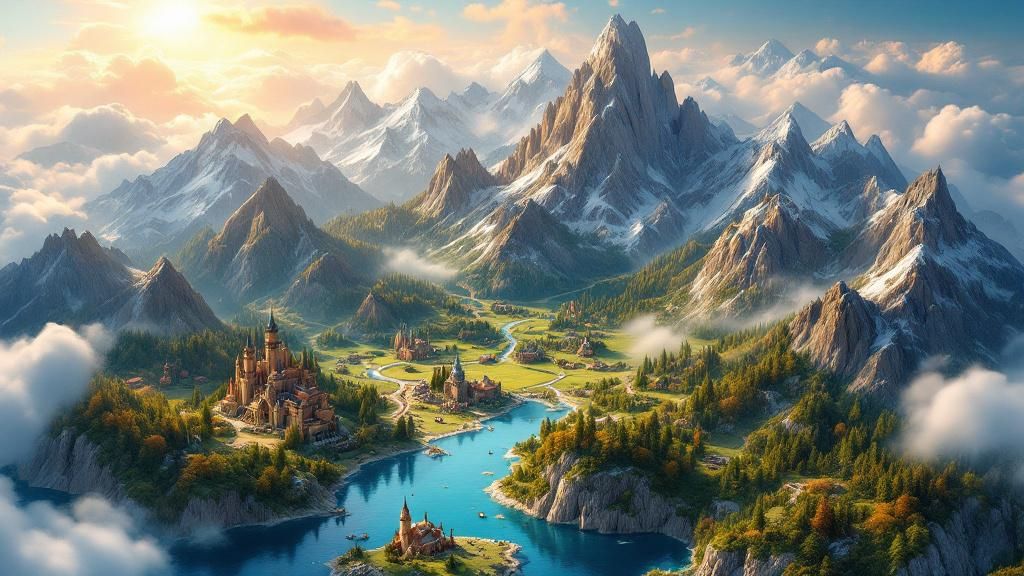
PC Gamer has launched a fresh gaming knowledge quiz that assesses player familiarity of legendary in-game locations. The quiz presents 20 screenshots of fictional worlds from well-known titles, giving participants just 15 minutes to recognise each location based purely on their geographical layout. Some images show greater clarity than others, and not all worlds appear in their entirety, making the quiz appropriate for casual players and serious map enthusiasts alike. The quiz takes cues from the wonder of exploring new lands through virtual cartography—a experience far more preferable to actual wayfinding difficulties. Players are invited to share their scores in the comments and debate which videogame world maps have made the strongest impact on them.
The Science of Video Game Cartography
Videogame world maps have become far more than mere navigation tools—they’re works of art that engage players’ creativity and shape the full gaming experience. From the instant gamers open a digital map, they’re transported into meticulously crafted worlds brimming with fictional settlement names, mysterious landmarks, and geographical wonders. These fictional GPS systems act as gateways to exploration, providing views into unexplored territories and hidden secrets yet to be uncovered. The wonder of discovering a fresh in-game map for the first instance is unparalleled in video games, creating a sense of wonder that surpasses the annoyance of actual-world directions.
What drives videogame cartography so compelling is how it communicates narrative and world-building through graphical presentation alone. A well-crafted map reveals narratives about empires, tensions, and peoples without dialogue of any kind. Players can follow commercial pathways, spot strategic locations, and reconstruct the past of fictional worlds simply by analysing the layout of continents and kingdoms. This graphical narrative approach has evolved significantly over decades, from basic pixelated designs to magnificent, complex creations that players happily dedicate time to studying. The finest videogame cartography don’t just reveal pathways—they provoke wonder and encourage exploration of every corner.
- Standout maps from Final Fantasy, Elder Scrolls, and Baldur’s Gate franchises
- Notable locations including Midgard, Ishgard, and numerous fantasy kingdoms
- Maps that reveal world lore and historical development via geography alone
- Digital cartography that elevates navigation into a deeply engaging gaming experience
Testing Your Gaming Locations Understanding
PC Gamer’s newest quiz challenges players to recognise 20 iconic videogame worlds based solely on their world map screenshots. With just 15 minutes on the clock, participants must draw upon their video gaming expertise to recognise well-known environments and spatial arrangements. Some images offer more clear hints than others, whilst certain maps display limited sections of their imaginary realms. Whether you’re a seasoned gaming cartographer or someone who occasionally glances at the map screen, this challenge provides an engaging assessment of your ability to identify gaming’s most cherished worlds at a glance.
The quiz celebrates the creative craftsmanship that underpins building videogame world maps, from vast fictional landmasses to complex underground labyrinths. Players are encouraged to share their results and explore which maps have made the strongest impact throughout their gaming journeys. The challenge doesn’t require possessing perfect real-world navigation skills—it’s about recognising the imaginary realms that have captivated gamers over the years. Regardless of your performance or struggle with a few obscure locations, the exercise serves as a wonderful testament of gaming’s most iconic geographical creations.
What Creates a Map Unforgettable
Standout videogame maps possess recognisable aesthetic elements that swiftly carry players into their created universes. The best examples include recognisable landmarks, distinctive terrain elements, and strategically planned environments that embody the story and worldbuilding. Whether it’s the icy mountain ranges of a Nordic realm or the vast sandy expanses of an bygone era, these recognisable imagery become permanently etched into players’ recollection. A truly iconic map conveys its world’s personality through geography alone, making it instantly identifiable even years after players have finished the game.
The affective connection players form with videogame maps originates from the adventures they’ve experienced within those worlds. Maps develop connections with memorable quests, challenging boss battles, and crucial narrative beats, transforming simple geographical representations into repositories of memory. When players come across a recognisable map image, they’re not simply spotting geography—they’re reliving moments and feelings associated with their time exploring that realm. This compelling bond between map and memory means the finest game map design remains in players’ memory well beyond the game’s ending.
Legendary Realms That Define Gaming
| Game Title | Map Significance |
|---|---|
| Final Fantasy VII | Introduced players to the expansive world of Midgard, featuring diverse regions from industrial cities to mystical forests |
| The Legend of Zelda: Ocarina of Time | Established the template for epic adventure maps with interconnected dungeons and hidden secrets across Hyrule |
| World of Warcraft | Created an immersive persistent world where players navigate between kingdoms like Lordaeron and Kalimdor |
| Skyrim | Presented a vast Nordic landscape filled with towering mountains, ancient ruins, and countless discoverable locations |
| Dark Souls | Crafted an intricately interconnected world where geography itself becomes a puzzle and source of environmental storytelling |
| Baldur’s Gate 3 | Offers sprawling fantasy realms with multiple distinct regions that reflect the game’s diverse narrative possibilities |
Iconic videogame maps act as the foundation upon which remarkable gaming experiences are developed. These worlds transcend mere functional navigation tools, transforming into characters in their own right within gaming narratives. From the moment players initially see their destination on a map, they’re personally connected in the adventure to come. The greatest maps balance visual distinctiveness with intuitive structure, ensuring players can both appreciate their beauty and find their way easily. They convert exploration from a chore into an expedition, encouraging curiosity and prompting gamers to explore past the beaten path in search of hidden treasures and secret locations.
Why We Enjoy Discovering Virtual Worlds
Videogame in-game maps possess a distinctive appeal that goes beyond their functional role as directional guides. There’s something truly enchanting about unfurling a digital map for the initial occasion, discovering imaginative location titles and mysterious landmarks that spark the imagination. Unlike their real-world counterparts—where getting lost might mean missing your turn—game maps invite exploration and benefit inquisitive players. They transform the simple act of moving from one location to another into an exciting journey, creating a feeling of exploration that maintains player interest long after the early excitement wears off. This emotional connection between player and place is what distinguishes unforgettable game moments from unremarkable alternatives.
The craftsmanship behind celebrated game mapping cannot be overstated. Developers dedicate substantial resources into creating visually unique environments that feel lived-in and interconnected, whether it’s the sprawling industrial landscape of Midgard or the Scandinavian summits of Skyrim. These maps function as wordless narratives, expressing the game’s character and ambience through geography alone. A well-designed world map prompts players to wonder: What awaits beyond that mountain range? Why is that region enveloped in gloom? This atmosphere of intrigue and discovery keeps exploration feeling fresh, even in games we’ve experienced repeatedly. The best maps balance aesthetic beauty with intuitive design, ensuring players want to discover every corner.
- Maps forge emotional connections to fictional worlds that persist in player memory
- Distinctive geography allows players traverse whilst preserving visual interest and immersion
- Hidden locations and concealed spaces recompense curiosity and inspire thorough exploration
- Environmental storytelling by means of terrain composition communicates narrative absent of dialogue
- Interconnected level architecture changes navigation into a exploratory challenge
Challenge Yourself and Showcase Your Performance
PC Gamer’s latest video game challenge tests your familiarity with iconic world maps to the final challenge. You’ll have a quarter of an hour to recognise twenty different videogames using only images from their imaginary worlds. Some images are more revealing than others, and you won’t always see complete maps in full, but genuine gaming enthusiasts should consider it relatively straightforward. Whether you’re a veteran role-playing game fan or a relaxed adventure gamer, this quiz is designed to assess your familiarity with the most cherished and well-known settings in gaming. It’s the perfect opportunity to discover exactly how much you know the digital environments you’ve ventured through.
Once you’ve finished the challenge, the real fun begins. Share your results in the comments area underneath and let the PC Gamer community see how you performed. Did you nail it with a perfect score, or did a few obscure maps catch you out? Beyond your performance, we’d love to hear your views about which videogame world maps stand out most in your memory. What causes particular fictional landscapes more unforgettable than others? Your insights might encourage other players to return to favourite titles or explore fresh environments worth exploring.
